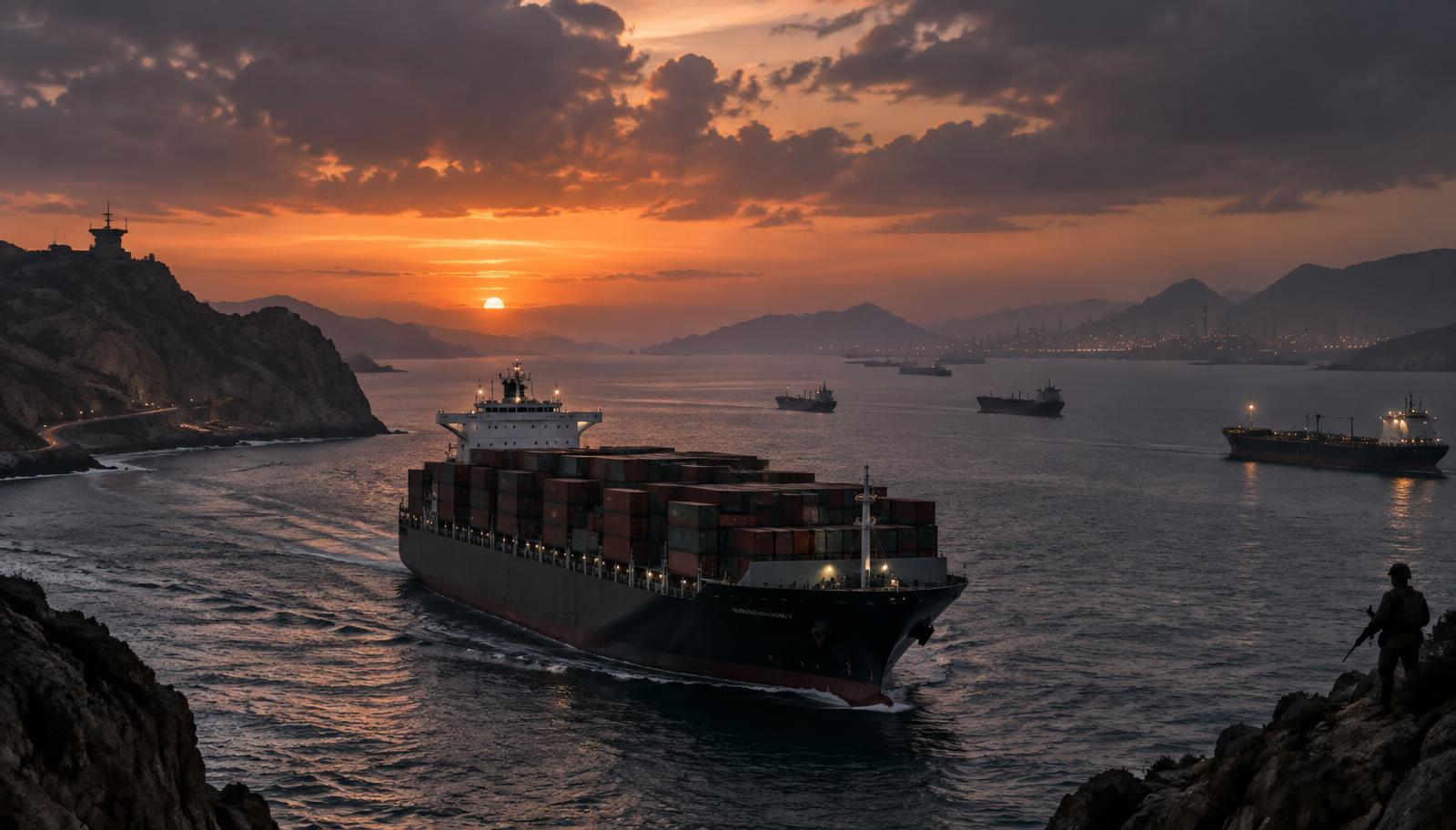
The global economy in 2026 sits at a strange crossroads. On one side, war in the Middle East has pushed energy prices higher and disrupted supply chains, halting the disinflation that had been underway for years. On the other, an AI-driven trade boom has provided an unexpected cushion, partially offsetting the drag from geopolitics. To understand this year's economic trajectory, you have to see both forces pulling at once.
Slower growth — but not recession
According to the IMF's July 2026 World Economic Outlook update, global growth is projected at 3.0% in 2026, down from 3.5% in 2025, before recovering to 3.4% in 2027. The IMF describes this as a “V-shaped” recovery.
Yet beneath that relatively mild headline number lies disagreement among forecasters. The World Bank's June Global Economic Prospects was gloomier, cutting 2026 growth to 2.5% — the weakest since the pandemic. UNCTAD landed in between at 2.6%. The gap comes down to differing assumptions about how long the Middle East conflict lasts. The IMF's baseline assumes the Strait of Hormuz begins reopening in mid-July; the World Bank is more cautious.
The Middle East war: the primary drag
If 2025's main uncertainty was trade policy, 2026's risk centre has clearly shifted to geopolitics. The conflict that erupted in late February delivered what amounts to a textbook negative supply shock through three channels: energy, shipping and finance.
The Strait of Hormuz — through which roughly one-fifth of global oil supply and a quarter of LNG trade passes — came close to a standstill at the conflict's peak. Gulf oil and gas output fell by roughly 13 million barrels per day of oil equivalent and 3.5 million barrels per day of natural gas. Qatar's Ras Laffan complex, a node accounting for about 17% of global LNG capacity, suffered serious damage. Brent crude broke $100 a barrel, peaking at $118.
The energy shock quickly spread through the broader price system. Fertilizer — a third of whose global trade passes through Hormuz — saw urea futures rise about 30%. The IMF expects global headline inflation to rise to 4.7% in 2026, up from 4.1% in 2025, reversing what had been a downward trend. UN reports note inflation rose more sharply in developing economies, from 4.2% to 5.2%, as higher fuel, transport and import costs erode real incomes.
AI trade: the accidental buffer
Without another force, however, things would have been worse.
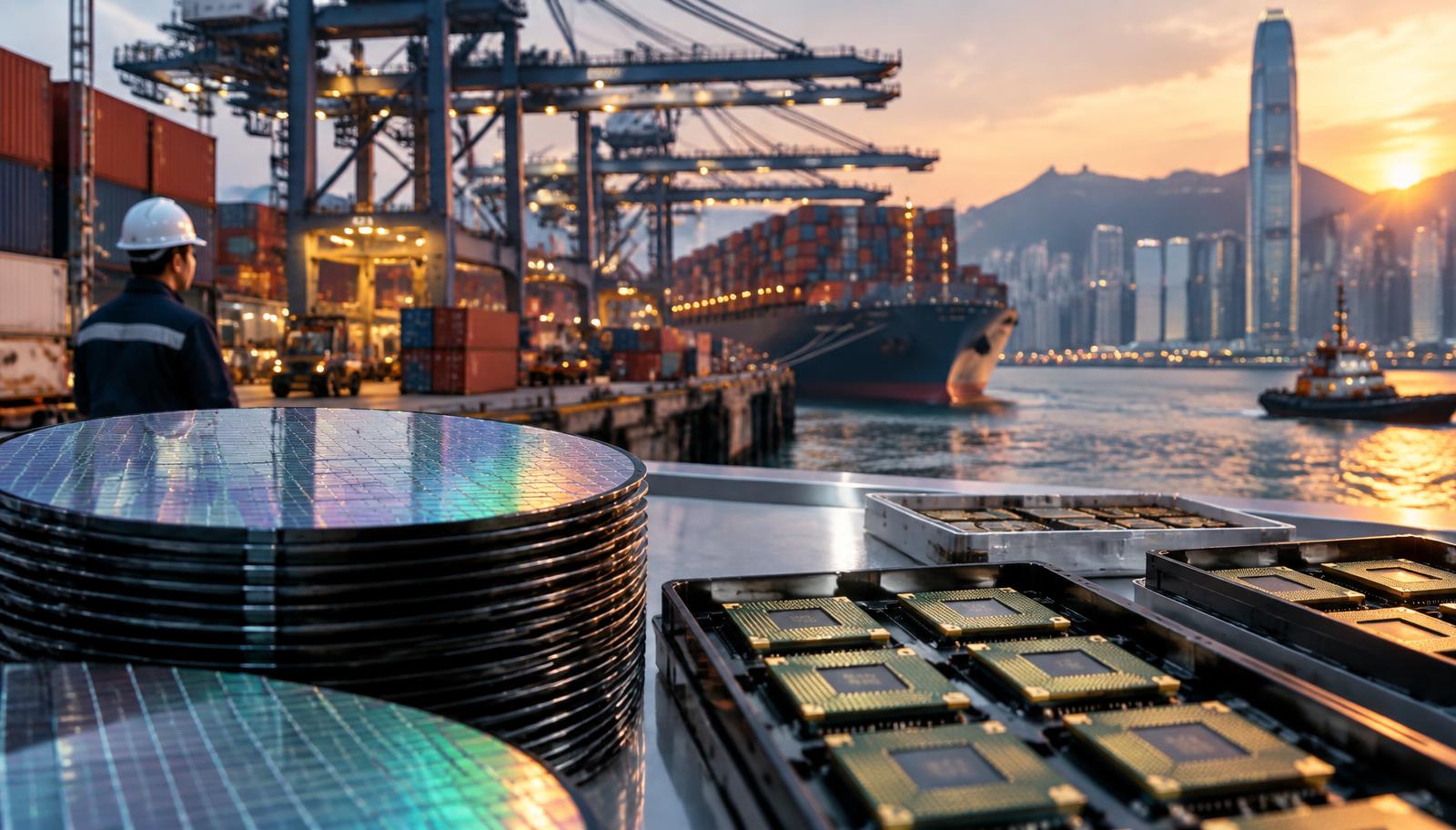
The AI-related trade boom became the core support for non-energy trade growth in 2026. The IMF explicitly notes that the conflict's negative effects were “partially offset by an acceleration in the global tech cycle” tied to AI breakthroughs and their widening adoption. Taiwan, South Korea, Thailand and Malaysia — four major net exporters of AI components and equipment — beat IMF forecasts by an average of 4.4 percentage points in the first quarter. South Korea's economy grew at a 7.5% annualized rate, and China-led AI hardware exports were similarly strong.
This “tech hedging geopolitics” dynamic has created a bifurcated world. EIU's August assessment notes that strong AI demand is “providing a floor for non-energy trade growth,” especially in Asia, where exports are disproportionately concentrated in semiconductors and other electronics. But UNCTAD warns that AI-related trade strength masks broadly weak growth in traditional manufacturing and commodities.
Trade policy: the old risk, overshadowed
It is worth noting that US tariff policy — 2025's number-one global trade risk — has taken a back seat in 2026. EIU states plainly that US trade policy has “re-emerged as the single most important risk to the global trade outlook, surpassing the disruption from the Iran war.” But under the shadow of the Middle East conflict, tariffs have lost urgency in public debate.
That does not mean the tariff shock has vanished. After the US Supreme Court struck down IEEPA tariffs in early 2026, the Trump administration quickly pivoted to Section 301 of the Trade Act of 1974, reimposing duties on more than 60 economies at rates of 10% to 12.5% under rationales such as “forced labor.” WTO data show global trade policy interventions in the first five months of 2026 hit a record high, nearly double 2024 levels. Against an energy crisis, these frictions register as a secondary shock.
Who pays the price
The costs of this “war and tech” duet are distributed highly unevenly.
The Middle East and North Africa is the direct victim. The IMF's regional report shows that even in the baseline scenario, MENAP growth slows to 1.4% in 2026, down 2.3 percentage points from earlier forecasts — one of the largest regional downgrades in recent years. Five of the eight oil-exporting economies touched by the conflict are expected to contract in 2026.
Energy-importing developing economies face compounding pressure. The UN reports that higher fuel, food and fertilizer costs are “intensifying inflation, financing pressures, and external vulnerabilities.” World Bank data are sharper still: by 2028, developing economies excluding China and India are expected to make “no progress” in closing the income gap with advanced economies — the lost decade since the pandemic is hardening into permanence.
Even within advanced economies, divergence is stark. The US, as a net energy exporter, is relatively insulated, and the IMF kept its 2026 growth forecast at 2.3%. The euro area, hit by higher energy prices and weak consumer confidence, was cut to 0.9%. The UK was downgraded to just 0.8% — the largest cut in the G7.
Outlook: uncertainty remains the throughline
The IMF maintained its “risks tilted to the downside” judgment in July. The most immediate threat remains another escalation in the Middle East. In the IMF's “adverse” scenario, with oil around $100, global growth falls to 2.5%; in the “severe” scenario, with oil above $110, growth drops to 2% — near recession.
A deeper risk comes from the AI boom itself. In its financial stability assessment, the IMF warns that if AI investment fails to translate into productivity gains as expected, or if optimism around tech stocks reverses, asset prices could reprice quickly. In other words, the very “tech pillar” propping up the global economy is itself exposed to repricing risk.
The first force is raising costs and creating divergence; the second is providing a cushion and reshaping the landscape.
The 2026 global economy is essentially running at the intersection of two narratives: a traditional supply shock from geopolitics, and a new growth engine from technological revolution. How that contest plays out will determine whether this year is remembered as “bumpiness with resilience” — or a recession that was overlooked.
This editorial reflects the author's analysis. Forecasts and market figures are time-sensitive and may be revised.