Track I — state to state
Formal negotiation between accredited officials. Binding, slow, and highly visible; failure carries reputational cost, which makes parties reluctant to enter before they are ready to concede something.
Diplomacy
Crisis negotiation, the arithmetic of the Security Council, and the arms-control agenda that is now thinner than at any point since the 1970s.
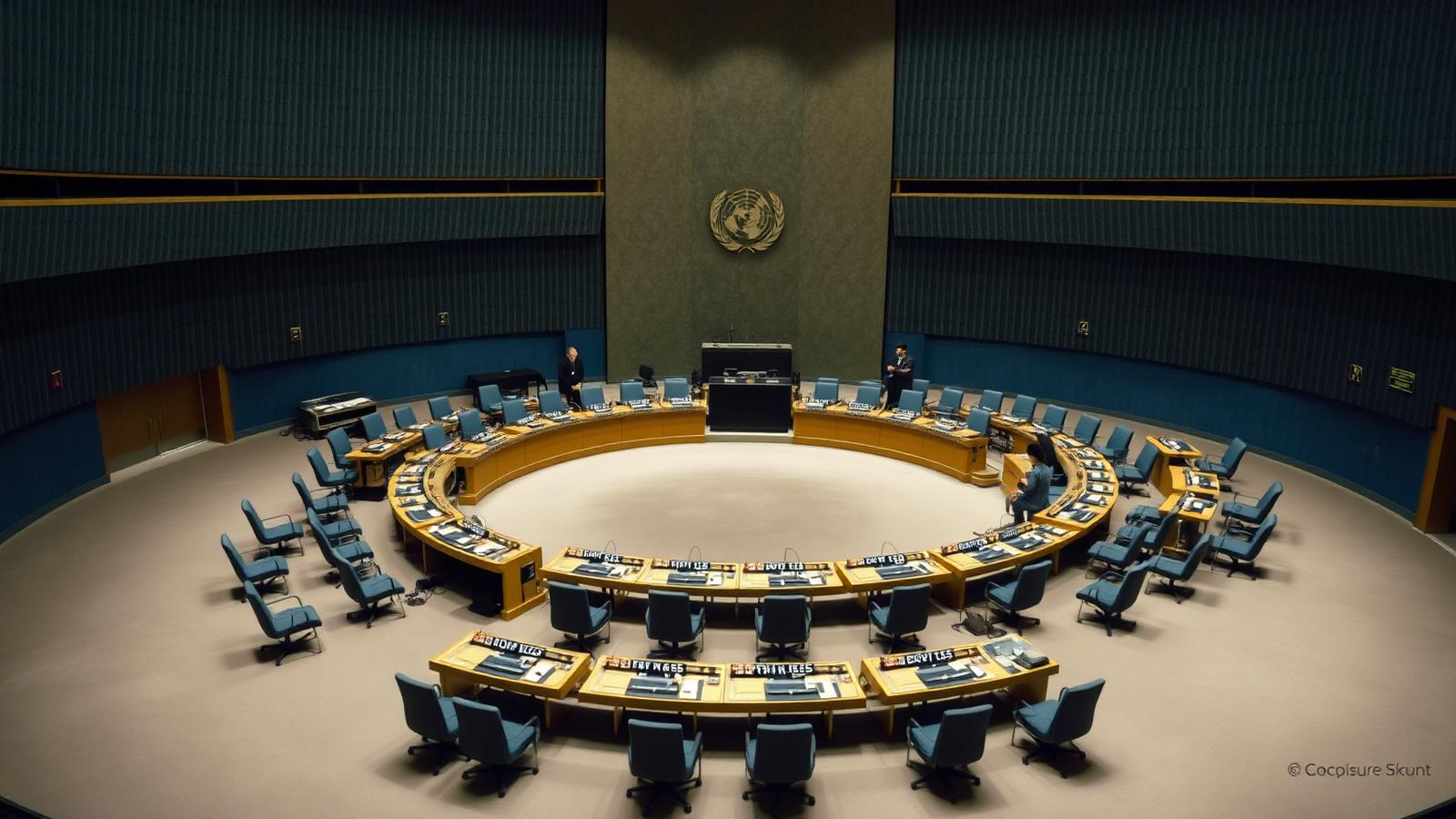
The Council is not a court and not a government. It is five states with a veto, ten elected members serving two-year terms, and a drafting culture in which whoever holds the pen on a file shapes what the other fourteen get to vote on. Understanding an outcome usually means understanding who drafted it and who quietly agreed not to block.
| Permanent member | Voting posture | Main leverage outside the room |
|---|---|---|
| United States | Uses the veto most often on Israel-related texts; drives sanctions regimes on North Korea and Iran. | Financial sanctions, security guarantees, aid packages. |
| Russia | Vetoes texts touching Ukraine, Syria and its own sanctions monitoring; has let panels of experts lapse. | Energy, arms supply, veto protection for partners. |
| China | Rarely vetoes alone; abstains to signal disapproval without blocking. Defends sovereignty framing. | Infrastructure finance, trade access, port and rail concessions. |
| United Kingdom | Penholder on several African files, including Somalia and Sudan sanctions. | Drafting influence, Commonwealth and EU-adjacent coordination. |
| France | Penholder on Sahel and Lebanon files; has pledged not to veto in mass-atrocity situations. | Francophone networks, EU convening power, military presence. |
A resolution needs nine votes in favour and no veto. Abstention by a permanent member does not block adoption — which is why abstentions are the Council’s main instrument of reluctant consent.
Formal negotiation between accredited officials. Binding, slow, and highly visible; failure carries reputational cost, which makes parties reluctant to enter before they are ready to concede something.
Officials attend in a personal capacity, hosted by a think tank or neutral state. Used to test formulas that neither capital can yet endorse in public.
Former officials, academics and civil society. Its value is generating options and keeping channels warm during formal breakdowns, not signing anything.
A third party — the UN Secretary-General, a regional body such as IGAD or the AU, or a small state like Norway, Qatar or Oman — carries messages, drafts bridging texts and provides a face-saving venue.
New START's central limits lapsed in February 2026 with no successor negotiation under way. Both sides have signalled restraint pledges rather than treaty obligations — political commitments that can be reversed without notice.
Indirect talks and IAEA access negotiations continue in cycles. The core bargain — enrichment limits and monitoring for sanctions relief — is unchanged; the price of it has risen on both sides.
No substantive denuclearisation talks. Working-level channels exist but neither side has offered a sequencing formula the other can accept.
Multiple mediators have offered venues. Prisoner exchanges, grain and energy-infrastructure arrangements have proved more tractable than territorial questions.
Jeddah-track humanitarian commitments have repeatedly been signed and then breached. External backers of both belligerents are the decisive constituency, not the belligerents alone.
The CTBT remains unratified by key states; Russia withdrew its ratification in 2023. The monitoring system still works, which is what preserves the norm in practice.
The treaty timeline and warhead figures behind these files sit on the International page.
Security Council votes, mediation and arms-control coverage, refreshed every 5 minutes