
Editorial
Dahabshiil and its power
Somaliland’s most powerful company is a success story — but the economy it dominates may not be producing the independent middle class the country needs.
Dahabshiil is extraordinarily powerful within Somaliland’s private economy — but it is important to distinguish between what can be documented and what is alleged. The Dahabshiil Group spans banking, telecommunications, real estate, fuel and investment. When one group operates across so many parts of an economy, it holds advantages a small entrepreneur simply cannot match.
A structural problem, not a single company
Academic research describes Somaliland’s political economy in terms of “oligarchic–corporate power”: a relatively small number of powerful, often family-owned firms exercising disproportionate influence over policy and regulation. That does not make every large company corrupt — it means there is a structural problem worth examining, one that predates today’s arguments about Dahabshiil.
Land makes it sensitive
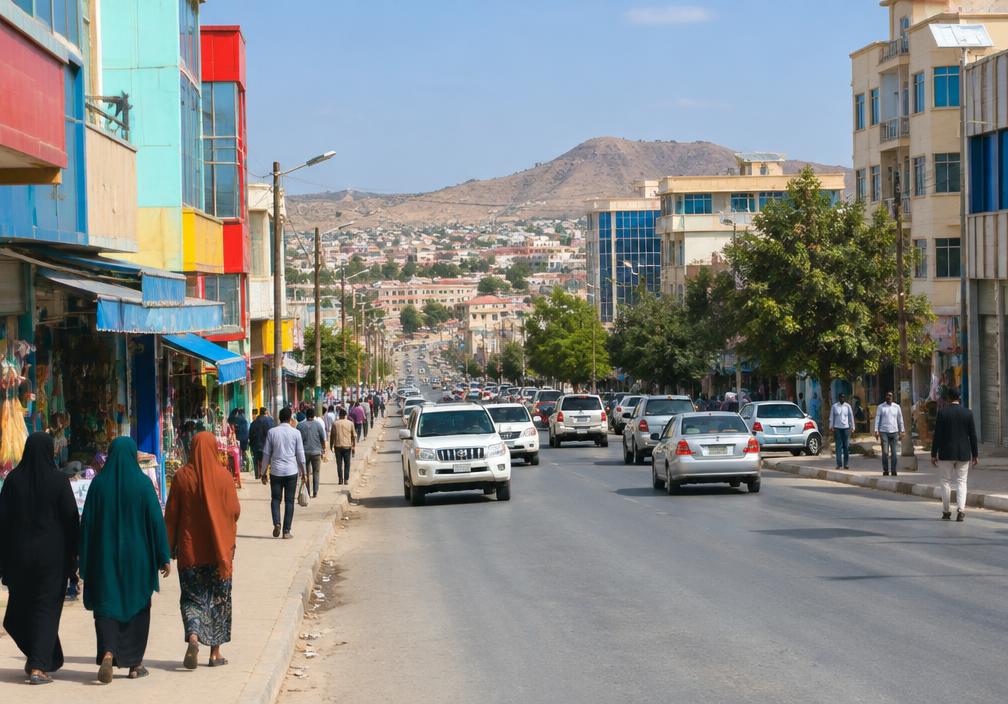
Reporting on Hargeisa’s land administration has raised questions about the sale of public land, including a parcel in the Police Line area sold to prominent businessmen, which sparked protests. Claims that Dahabshiil was a buyer have circulated, but we have not found published reporting that names it. Allegations about particular transactions are not proof of wrongdoing — they require documentary investigation. But the broader question is legitimate: what happens when scarce urban land concentrates in the hands of wealthy investors while ordinary entrepreneurs cannot acquire premises or affordable plots?
The missing middle
A healthy middle class grows through thousands of people building shops, workshops, farms, transport and technology businesses. They do not need government help — they need a market in which they can compete. A 2025 market study of Hargeisa, Borama and Burao found small, informal enterprises dominate, held back by limited finance, high costs and regulation — echoing the World Bank’s private-sector study. The contradiction is stark: Somaliland has entrepreneurial energy, but its economy may not be producing enough independent medium-sized businesses.
The real question
Is Dahabshiil a successful Somaliland business? Absolutely. Is Somaliland’s economy competitive enough to let hundreds of smaller companies grow into a strong middle class? That is far more questionable. The useful frame is not “Dahabshiil is bad” — it is whether success in Somaliland is determined by entrepreneurship and competition, or by access to land, finance, political connections and established networks. A country can have very successful businessmen and still have a weak middle class.
If Somaliland wants a genuine middle class, it needs competition policy, transparent public-land sales, accessible business finance, secure property rights, independent courts, predictable taxation — and real room for small and medium enterprises to grow.
Related reporting
- EconomySomaliland port expansion cuts costs, boosts trade, UK-backed study findsHorn Diplomat · Dec 2025
- EconomyCan Somaliland’s Berbera Port anchor African trade security?The National · Jul 2025
- LandLand grabs threaten peace in SomalilandIOL · Aug 2025
- LandUrban land governance and tenure insecurity in HargeisaWorld Journal of Advanced Research and Reviews · Dec 2025
- Small businessArtisan industry market and economic opportunity analysis in SomalilandInternational Solidarity Foundation · Jun 2025
- Small businessSomaliland’s private sector at a crossroadsWorld Bank · 2016
Reader comments
Share your thoughts on this editorial.